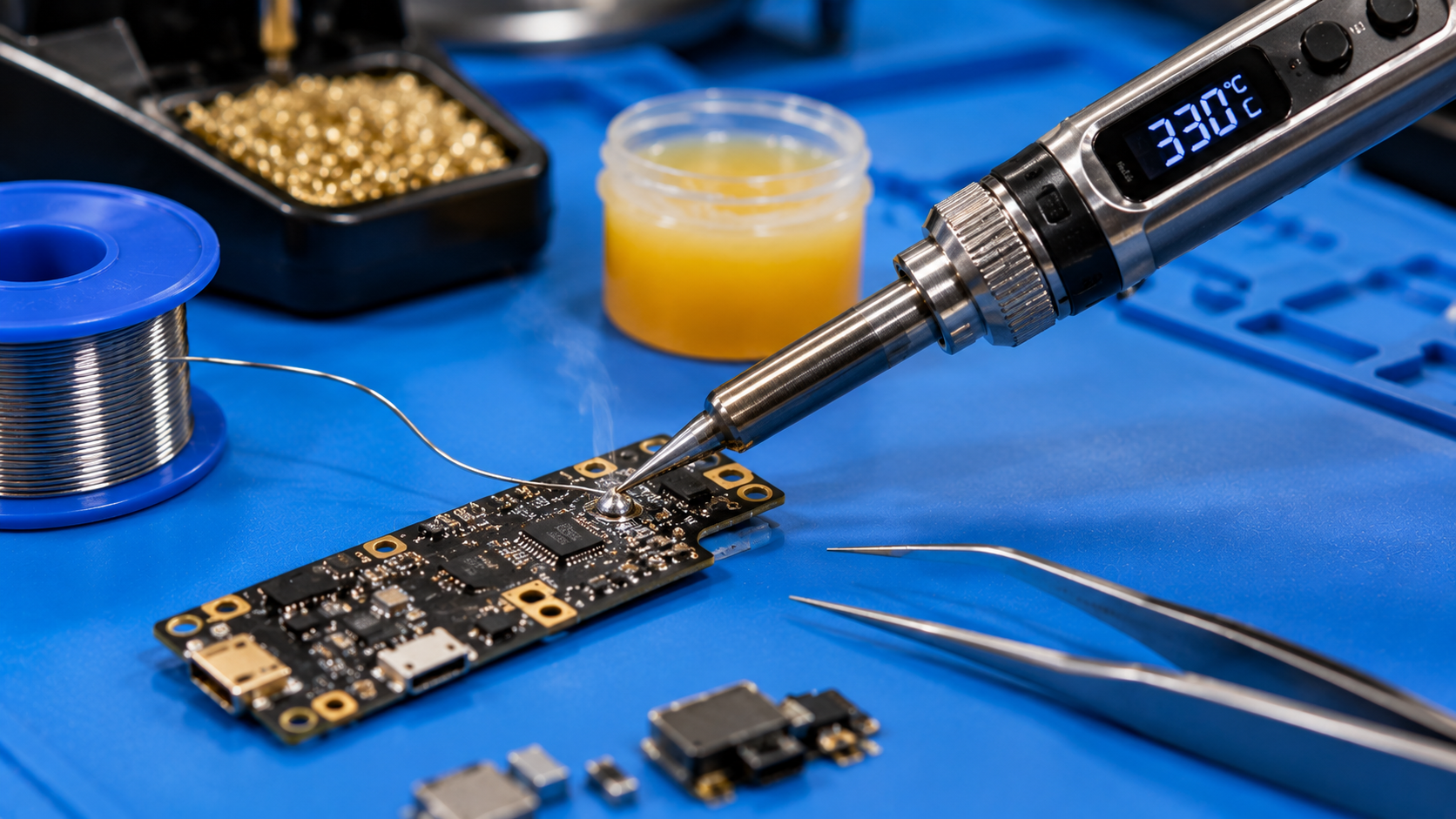
What Temperature Should Solder Melt?
One of the most common questions beginners ask is "What temperature should solder melt?"
The answer depends on the type of solder you are using.
While solder has a specific melting point, your soldering iron usually needs to be set significantly hotter so enough heat can transfer into the joint.
Leaded Solder
Traditional 63/37 tin-lead solder (Sn63/Pb37) melts at approximately 183°C.
Because it changes directly from solid to liquid without a plastic stage, many electronics technicians consider it easier to work with.
A soldering iron is commonly set between:
- 300°C–350°C for general electronics work.
Lead-Free Solder
Lead-free solder melts at a higher temperature.
Most common lead-free alloys melt between 217°C and 227°C.
For this reason, soldering irons are typically set between:
- 340°C–380°C
depending on the board, component size and solder alloy.
Why Doesn't My Iron Need To Match The Melting Point?
A common misconception is that the iron should be set to the exact melting temperature.
In reality, the iron must heat:
- The solder
- The PCB pad
- The component lead
Heat is constantly lost into the surrounding materials, so the tip needs to be hotter than the solder's melting point.
What Happens If The Temperature Is Too Low?
If the iron isn't hot enough you may experience:
- Solder refusing to melt
- Poor wetting
- Dull or grainy solder joints
- Cold solder joints
- Excessive heating time
What Happens If The Temperature Is Too High?
Running your iron unnecessarily hot can:
- Burn flux quickly
- Oxidise the soldering tip
- Damage PCB pads
- Overheat sensitive components
- Shorten tip life
Using the lowest temperature that comfortably completes the joint is usually the best approach.
Recommended Temperatures
| Solder Type | Melting Point | Typical Iron Temperature |
|---|---|---|
| Sn63/Pb37 (63/37) | ~183°C | 300–350°C |
| Sn60/Pb40 (60/40) | ~188°C | 300–350°C |
| Lead-Free | 217–227°C | 340–380°C |
Final Thoughts
The melting point of solder and the temperature of your soldering iron are not the same thing.
For most electronics repairs:
- Leaded solder generally works well around 320°C–340°C
- Lead-free solder often performs best around 350°C–370°C
Choosing the correct temperature helps produce cleaner joints, protects your components and extends the life of your soldering iron tip.
Frequently Asked Questions
Can I solder at 400°C?
You can, but for most electronics repairs this is hotter than necessary and may shorten tip life or damage sensitive components.
Why won't my solder melt?
Common causes include insufficient iron temperature, a dirty soldering tip, poor heat transfer or oxidised surfaces.
Does lead-free solder need a hotter iron?
Yes. Lead-free solder melts at a higher temperature than traditional leaded solder and usually requires a hotter iron setting.