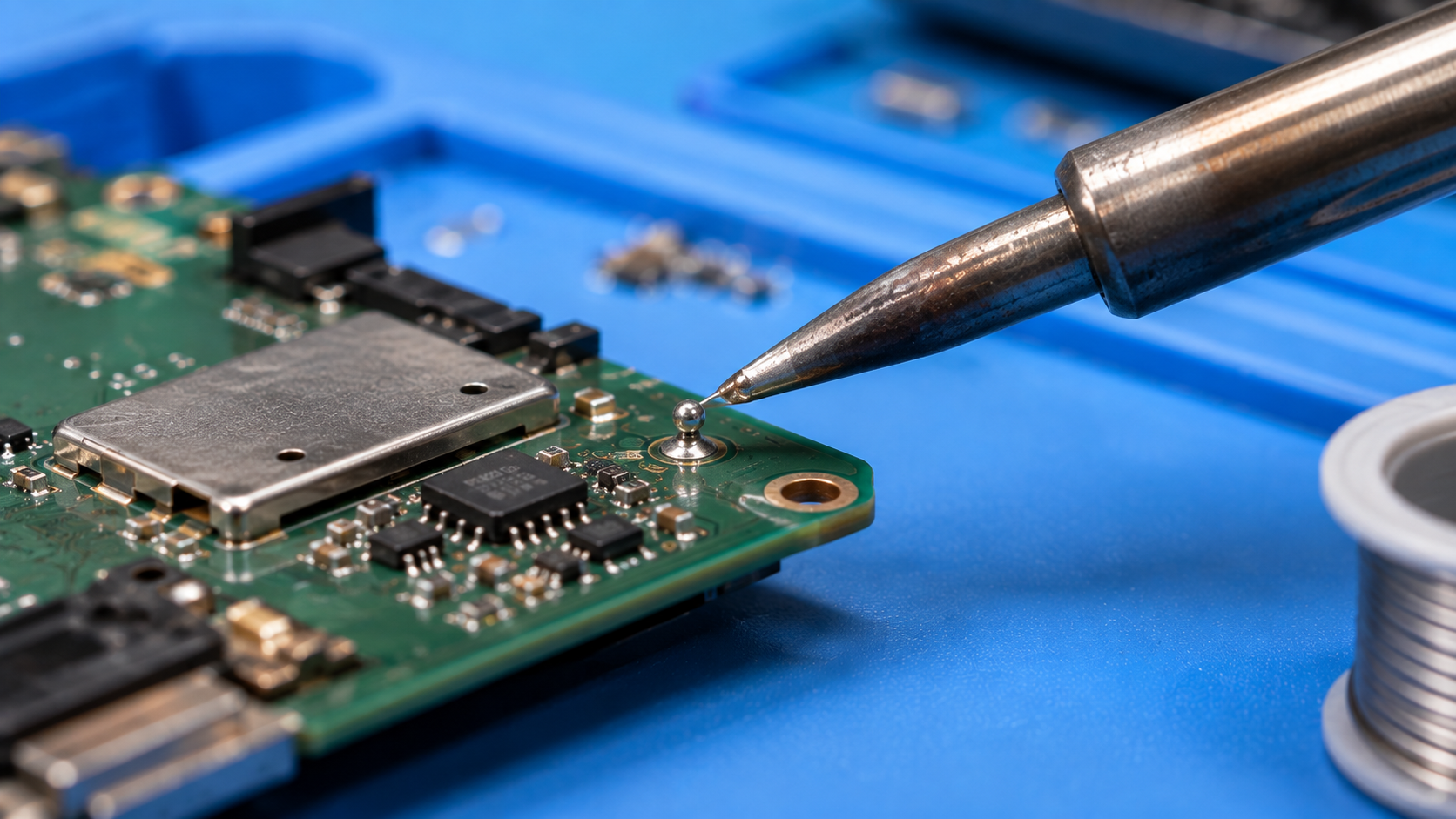
Why Won't Solder Stick?
One of the most common frustrations when learning to solder is watching the solder bead up or refuse to stick to the pad or component.
Fortunately, this is usually caused by one of a handful of common issues, all of which are easy to fix once you know what to look for.
1. The Surface Is Oxidised
Oxidation is one of the biggest reasons solder refuses to bond.
Copper pads, component leads and even soldering iron tips naturally oxidise over time.
How to fix it
- Clean the surface.
- Apply fresh flux.
- Lightly tin the area before soldering.
2. You're Not Using Enough Flux
Flux removes oxidation while helping solder flow smoothly.
Without it, solder often forms balls instead of flowing across the pad.
Solution
Apply a small amount of quality no-clean flux before soldering.
3. Your Soldering Iron Isn't Hot Enough
If the iron temperature is too low, the solder may melt on the tip but never properly wet the joint.
Typical temperatures:
- Leaded solder: around 320–350°C
- Lead-free solder: around 350–380°C
The exact temperature depends on the solder, iron and size of the joint.
4. Your Iron Tip Needs Cleaning
A dirty or oxidised tip transfers heat poorly.
If your tip is black instead of shiny, it's probably time to clean it.
Use:
- Brass wool
- Tip cleaner
- Fresh solder to re-tin the tip
5. The Joint Isn't Hot Enough
Remember:
The solder should melt because the joint is hot.
Avoid melting solder directly onto the iron tip and trying to paint it onto the board.
Instead:
- Heat the pad and component together.
- Feed solder into the joint.
- Remove the solder.
- Remove the iron.
6. You're Using the Wrong Tip Size
Very small tips struggle to transfer enough heat to larger joints.
Likewise, oversized tips make fine electronics work difficult.
Choose a tip that matches the size of the work you're doing.
7. Poor Quality Solder
Not all solder performs equally.
Low-quality solder may contain inconsistent alloy mixtures or poor-quality flux cores, making soldering much harder than it needs to be.
Using quality solder and fresh flux makes a noticeable difference.
Final Thoughts
Almost every soldering problem comes down to one of four things:
- Clean surfaces
- Good flux
- Correct temperature
- Quality solder
Once those fundamentals are right, solder should flow smoothly and produce reliable joints.
Like any practical skill, soldering becomes much easier with practice.
Frequently Asked Questions
Why does solder stick to my iron but not the PCB?
This is usually caused by oxidation, insufficient flux or the joint not being hot enough.
Can old solder go bad?
Solder itself has a long shelf life, but the flux core can degrade over many years if stored poorly.
Does more flux help?
In many electronics repairs, adding a little extra flux can make solder flow much more easily and produce cleaner joints.