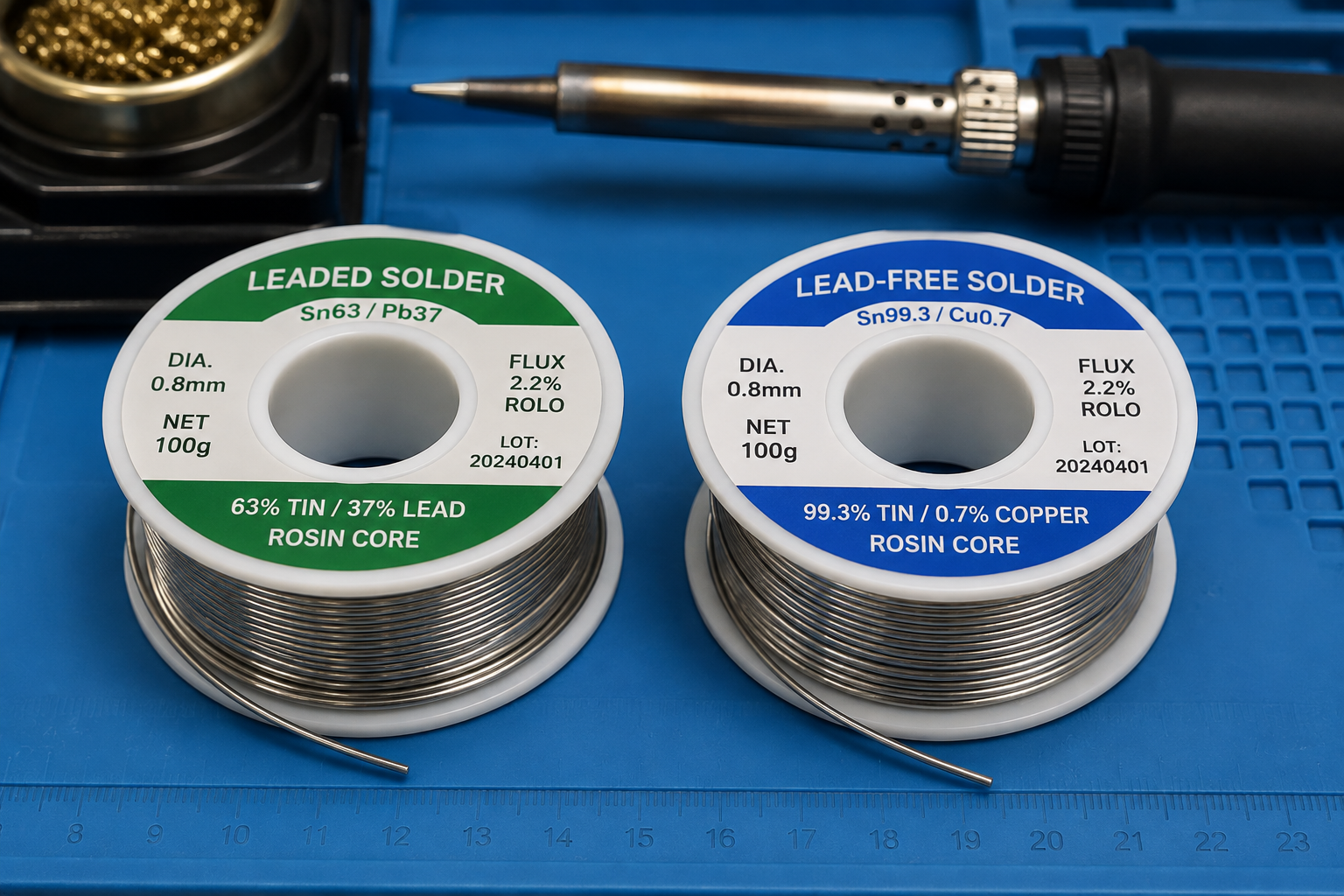
Leaded vs Lead-Free Solder: What's the Difference?
Choosing the right solder is an important part of any electronics repair.
The two most common types are leaded solder and lead-free solder, each with their own advantages.
Leaded Solder
Leaded solder has been used in electronics for decades.
Advantages include:
- Lower melting temperature
- Flows more easily
- Produces smooth, shiny joints
- Easier for beginners
- Excellent for repair work
Lead-Free Solder
Lead-free solder is commonly used in modern manufacturing.
Benefits include:
- No added lead
- Widely used in new electronic products
- Complies with regulations covering many newly manufactured devices
However, it generally requires higher temperatures and can be more challenging to work with during repairs.
Which Should You Choose?
The best choice depends on your repair and your experience.
Many technicians prefer leaded solder for repair work because it melts more easily and produces reliable joints.
Others choose lead-free solder to match the original manufacturing process or personal preference.
Tips for Better Results
Whichever solder you choose:
- Always use quality flux
- Use the correct tip temperature
- Keep your iron tip clean
- Practice on scrap boards first
- Allow joints to cool naturally
Conclusion
Both leaded and lead-free solder can produce excellent repairs when used correctly.
Understanding their differences helps you choose the most suitable solder for your particular project.