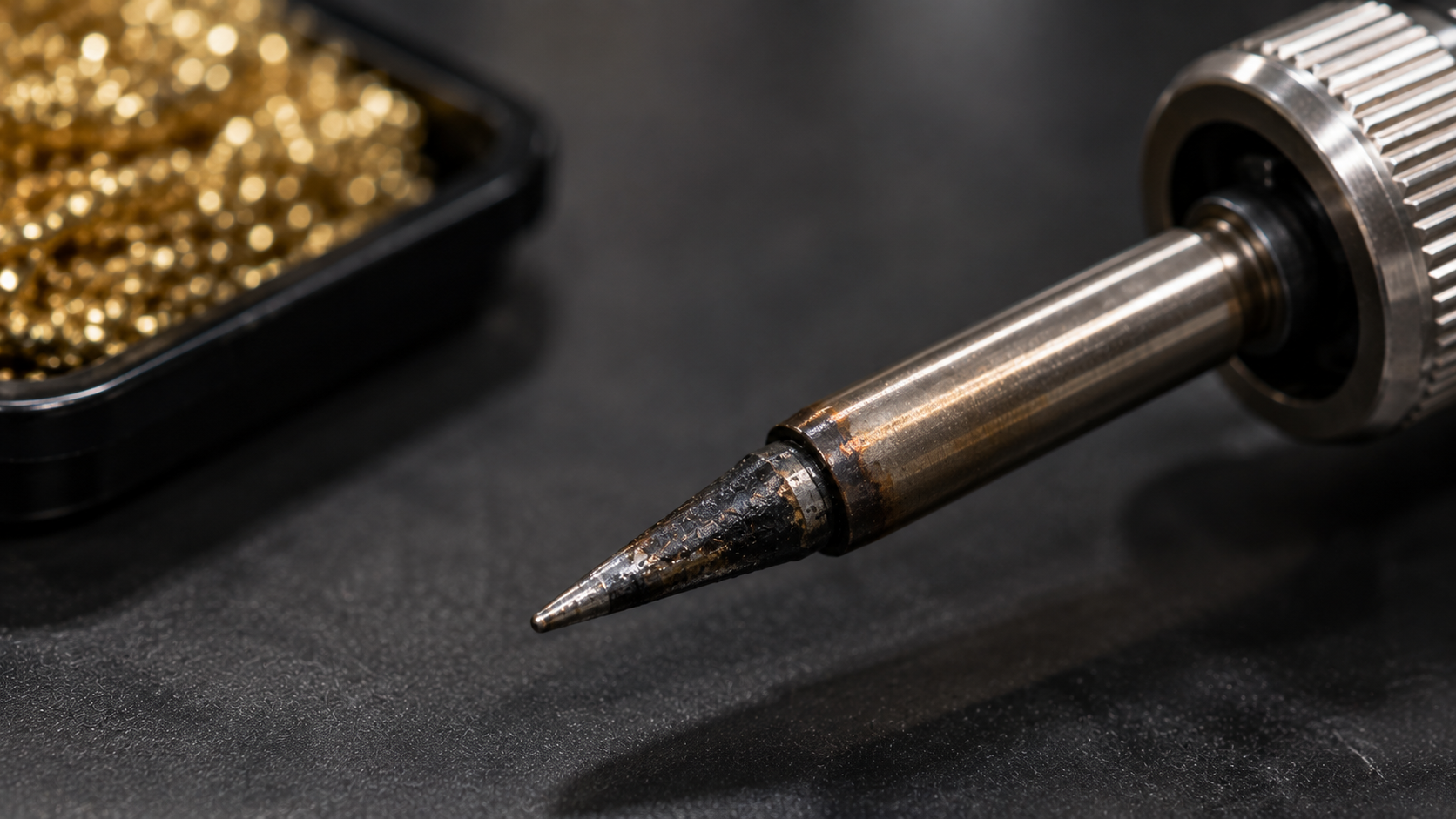
Why Does My Soldering Iron Tip Turn Black?
If your soldering iron tip has turned black and solder no longer sticks to it properly, the most likely cause is oxidation.
This is a very common problem, especially when a soldering iron is left hot for long periods or used at a higher temperature than necessary.
Fortunately, a black soldering iron tip does not always mean that the tip needs replacing.
Why Do Soldering Iron Tips Turn Black?
Soldering iron tips are coated with metal that allows molten solder to wet and flow across the surface.
When the hot tip is exposed to air, its surface gradually oxidises. This oxidation can create a dark or black layer that prevents solder from properly wetting the tip.
A small amount of oxidation is normal over time, but it can happen much faster if the iron is:
- Left switched on without being used
- Running at an unnecessarily high temperature
- Frequently left without a protective layer of solder
- Cleaned incorrectly
- Used with heavily contaminated materials
Once enough oxidation develops, you may notice that solder beads up or falls off the tip instead of forming a smooth coating.
Why Is a Black Tip a Problem?
A clean and properly tinned soldering iron tip transfers heat efficiently from the iron to the component or solder joint.
Oxidation acts as a barrier between the tip and the workpiece.
This can cause:
- Poor heat transfer
- Solder refusing to stick to the tip
- Longer soldering times
- Difficulty getting solder to flow
- Inconsistent or poor-quality solder joints
It can be tempting to increase the temperature when this happens, but that can make the oxidation worse.
How to Clean a Black Soldering Iron Tip
Start by gently cleaning the hot tip using brass wool.
Insert the tip into the brass wool a few times to remove surface contamination, then immediately apply fresh solder to the tip.
If the oxidation is more severe and normal cleaning does not restore the surface, a soldering iron tip refresher or tip tinner can help remove oxidation and re-tin the tip.
After cleaning, the working surface of the tip should have a shiny coating of solder rather than appearing dry and black.
Avoid aggressively scraping or filing the tip. This can damage the protective plating and permanently shorten the life of the tip.
What Is Tinning?
Tinning simply means applying a thin layer of solder over the working surface of the soldering iron tip.
A properly tinned tip should look shiny and evenly coated.
The solder layer improves heat transfer and also helps protect the tip from exposure to oxygen while it is hot.
It is good practice to apply fresh solder:
- When you first heat the iron
- Periodically while soldering
- After cleaning the tip
- Before switching the iron off
Leaving a small coating of solder on the tip before turning the iron off can help protect it while it cools.
Is Brass Wool Better Than a Wet Sponge?
Both can be used to clean soldering iron tips, but brass wool is particularly convenient because it removes contamination without rapidly cooling the tip.
A wet sponge causes a sudden temperature drop each time the tip is cleaned.
Whichever method you use, the important part is to re-tin the tip after cleaning rather than leaving the hot metal surface exposed.
Can a Black Soldering Iron Tip Be Saved?
Often, yes.
If the problem is simply surface oxidation, cleaning followed by re-tinning may restore the tip.
For more stubborn oxidation, a dedicated tip refresher can often help.
However, if the protective plating has become heavily damaged, pitted or worn away, replacing the tip may be the better option.
How to Prevent Your Soldering Iron Tip Turning Black
Good tip maintenance can significantly extend its lifespan.
Try to:
- Use the lowest practical soldering temperature for the job
- Avoid leaving the iron sitting at full temperature unnecessarily
- Clean the tip regularly
- Keep the tip properly tinned
- Apply fresh solder after cleaning
- Tin the tip before switching the iron off
- Avoid filing or sanding plated soldering tips
These small habits can make a noticeable difference to both tip life and soldering performance.
Final Thoughts
A black soldering iron tip is usually a sign of oxidation rather than an immediate reason to throw the tip away.
Start by cleaning it with brass wool and applying fresh solder. If normal cleaning is not enough, a soldering iron tip refresher may help remove more stubborn oxidation.
Keeping the tip clean, using sensible temperatures and maintaining a thin layer of solder on the surface will help prevent the problem from returning.